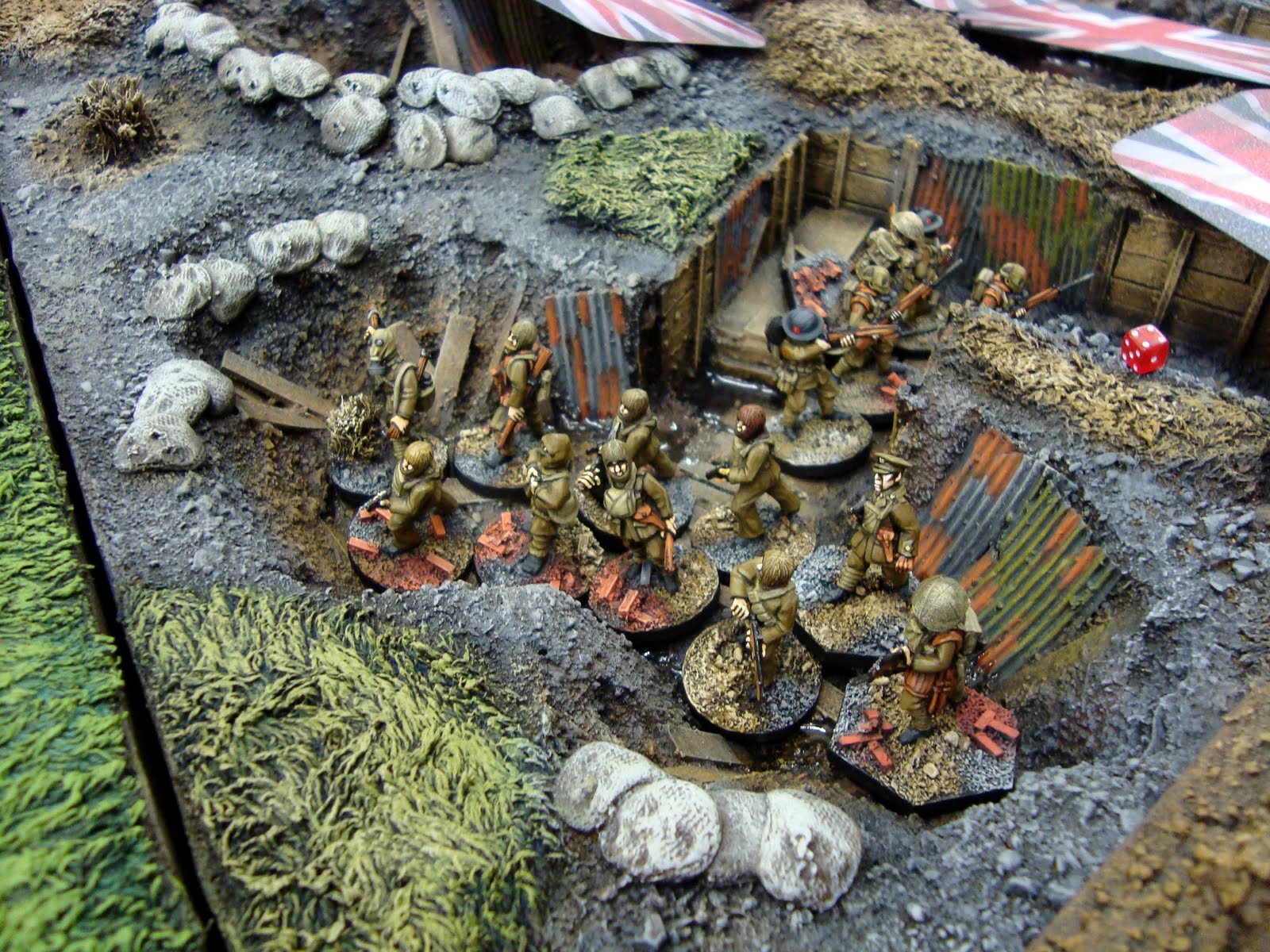
On Tuesday night, we played through the first of a brace of games set in and around Polygon Wood in the Ypres Salient in early October 1917.
For a while I‘ve been thinking of ways in which to add a bit more background and context to the evening games I play at my local wargames club in St Albans. I was hoping to immerse the players a little more into the history behind the games and develop further the themes which seem to me to be characteristic of the Third Battle of Ypres: immense battles, difficult and even abysmal terrain, dominant artillery, rapidly evolving tactics and weather.
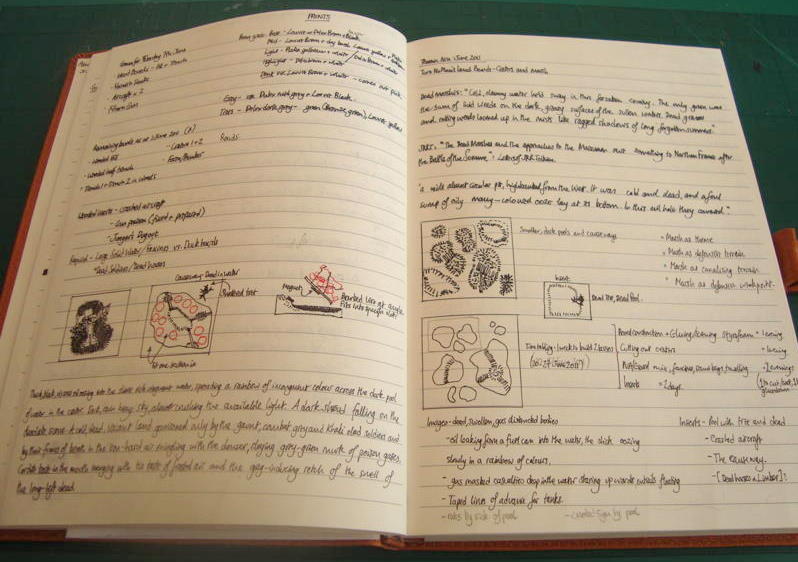
In Blog posts later this month I’ll describe in more detail the way I went about trying to create this background through a series of pre-game emails sent to the players, each of which was focused on different levels of command. On replying to these emails, the decisions made by the players then influenced the forces available and the artillery tactics used by the German and British sides during the Tuesday night club wargame and also the precise terrain over which the game was to be fought.
If people are interested, I’d also be happy to post the full umpire’s notes for the mini-campaign, and also the email exchanges and game briefings once we’ve played the final game on Tuesday 13th December.
Enough of future plans, and on with the action from the first of the two games…
The German Objectives
The game featured a German spoiling attack on British positions on the east side of Polygon Wood. The German commander (Elton) had been told by email that his forces had been pushed out of Polygon Wood in late September 1917, retreating to the east in the face of a colossal “bite and hold” operation by the Australian Divisions within the British Second Army. Casualties amongst the German defenders had been heavy. It was imperative that the remaining German forces prevented further British advances which could threaten the Gheluvelt Plateau, Broodseinde Ridge and further eastwards towards railheads at Roulers and the captured Channel ports of Ostend and Zeebrugge.
The German commander had, by email, chosen to forestall the next British attack by launching a series of spoiling attacks on the British and Imperial forces reforming in Polygon Wood. His tactics, while aggressive, we completely in line with the summary prepared by the German Fourth Army in late September 1917 of how the rest of the Flandernschlact should be fought:
“In order to wear down and destroy the enemy [British] infantry in the same way as the enemy attempts to do to our infantry, there is to be an increased concentration on the engagement of the enemy infantry. Most of the field artillery is to be used I this way…..Large amounts of gas [shells] are to be used against enemy [battery] positions and the enemy forward battle zone. Army headquarters will issue orders separately for these “Major Gas Engagements”. Each of the Groups will also direct smaller scale gas shoots against the infantry whenever the wind is favourable. Extensive use is to be made of gas-filled mortar bombs…we have to force the enemy, therefore, constantly to maintain larger forces in their forward battle zone and to place their reserves further forward, so that our artillery has worthwhile infantry targets to engage. This can only be done if we launch attacks ourselves, preferably during the intervals between their attacks, so that we can disrupt their plans. This will force the enemy, if they are to be able to hold on to the ground which they have won, to launch costly counter-attacks against which we can deploy maximum firepower” (“The German Army at Passchendaele”, Jack Sheldon, pp 186-188)
The Terrain, the Weather and the Opposing Forces
I warned the players that they should consider the whole of the board to be covered with the stumps of shell shattered trees.
Lieutenant Cyril Lawrence described the appearance of the wood after the battles of August 1917:
“on our left, the shattered remains of Polygon Wood – gone – absolutely wiped out – simply a mass of huge splintered trunks and matchwood lying everywhere. In front, two or three pill boxes stand up like warts … and everywhere, everywhere the sea of great shell holes, lip to lip – not a trace of grass, of the forms of the hedges or the fields remains – just one heaved up mass of turned up earth”.
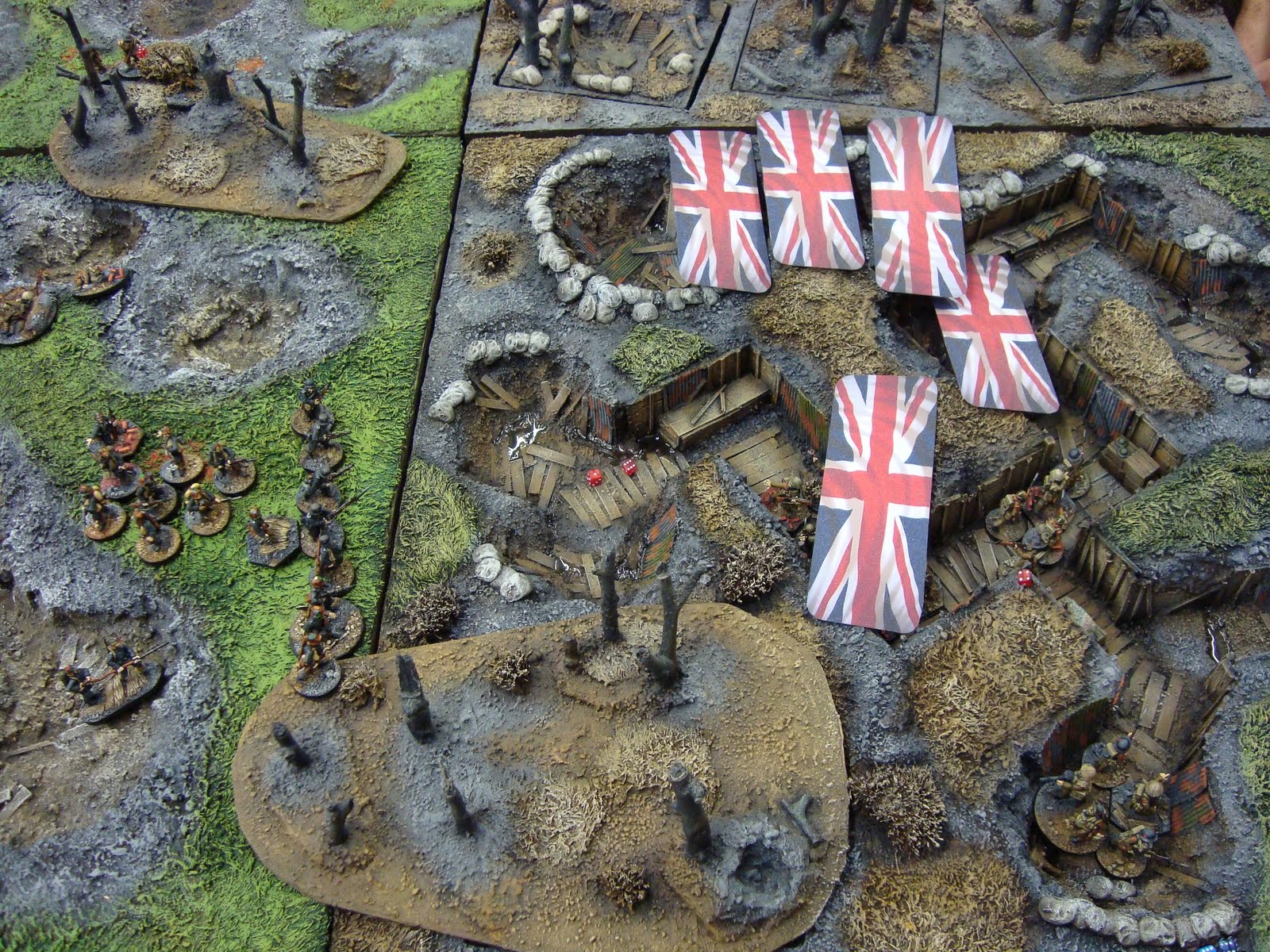
I randomly allocated movement penalties to each terrain board as everything I’d read about Polygon Wood in early October 1917 seemed to suggest it was an exhausting, challenging place to move or deploy through. I randomly determined the weather (light rain and mist) and the scene was set for a dawn attack by Germans Stosstruppen on the British lines.
The German Commander had access to a depleted company of Stosstruppen from 3rd Battalion, 229th Reserve Infantry Regiment, led by Fahnrich Joachim Vogel. This unit had historically been in action in an earlier spoiling attack in Polygon Wood on 23 September 1917. While it had suffered casualties, I reasoned it would still (just) be a first-rate fighting unit, albeit with its fighting value significantly depleted. To reflect the quality of troops and leadership of this formation, the German players on the night (Richard and Elton) were given a “German Dynamic Commander” card and two “Sturmabteilung Vor!” cards. In the end, these cards were to be crucial. I also gave Fahnrich Joachim Vogel a devil’s luck card, thematically entitled (in my dodgy German) “das Glück des Teufels”.
Opposing them were Major Jasper Whitechapel of “A” Company of 1/Middlesex with a small force of exhausted troops ready for relief from the front line. The last couple of days had been extremely difficult for this formation, with constant German shelling both along the line and across the rear areas of the battalion (the latter resulting from the German Commander’s email instructions focusing on artillery interdiction on British rear areas and supporting formations). Accordingly, the formation was barely more than half strength. Despite this, Major Whitechapel’s orders were to hold his Company headquarters position at all costs.
The British players were told that “A” Company of 1/Middlesex were due to be relieved by First Lieutenant Jackie Shearer of 2nd Platoon, “B” Company, 12/13 Northumberland Fusiliers, part of 62nd Brigade, 21st Division which would be taking its position for the forthcoming offensive. Once the German Stosstruppen commenced their spoiling attack, would the Northumberland Fusiliers arrive in time?
The Game
The game opened with a vicious fight between the lead assault sections of the Stosstruppen force, led by the dynamic Fahnrich Joachim Vogel and Feldwebel Max Schrek and the most advanced section of the 1/Middlesex.
Despite the ground in the first terrain board being determined as abysmal, and substantially retarding German movement, the shock and surprise of the Stosstruppen engaging the lead British rifle section in close combat was devastating. The remnants of the first British section withdrew in disorder as German artillery started to flay the British base terrain boards and rear areas.
While German movement was slowed by the abysmal terrain and some very poor movement dice rolls, the presence of a “German Dynamic Commander” card and two “Sturmabteilung Vor!” cards managed to drive the Stosstruppen forward.
Two German Granatenwerfer 16s added to the onslaught, peppering the British defenders with grenades whenever they appeared, directed by German front line troops shouting back locations to which their “pigeons” could be aimed.
A British Lewis gun section threatened to stem the assault, but Fahnrich Joachim Vogel continued to drive his men forward in repeated close assaults. The “trench brooms” of the lead Stosstruppen section (automatic C96 Mausers and Luger machine pistols with snail magazines), supplemented by a number Stosstruppen with bayonets and trench knives, clawed through the British defending sections, although at a cost.
By now the German forces had broken into the second terrain board, and found the going slightly better. More of the German Blinds were moved forward, allowing fresh German sections to fight off a flank attack by a section of British bombers as the struggle became more desperate on both sides.
By now the German artillery bombardment had lifted. The German artillery strikes had succeeded in killing all of the 1/ Middlesex’s Company headquarters section except for Major Whitechapel who seemed to be living a charmed life. Importantly, the British forward artillery liaison subaltern had been killed and his telephone cables to British SOS artillery batteries were now severed. (I let the British players know at the end of the game that the German Commander had, by email, informed me that his artillery forces would concentrate on counter-battery fire during the assault as well as bombarding British rear areas.) Major Whitechapel’s frantic signalling with the artillery liaison flags (collected, bloodstained, from a dying signaller's hands) was to no avail. On this part of the battlefield, the British SOS artillery barrage never arrived.
However, the German barrage had been too short in duration to catch the leading platoon of the 12/13 Northumberland Fusiliers as they made their exhausting progress through the ruins of Polygon Wood. Halfway through the game, the first sections of the Northumberland Fusiliers' lead platoon could be seen advancing onto the British baseline.
Spurred by the sight of fresh British blinds appearing on the table as the early morning mist dissipated, the Germans pressed their attack with renewed force. Support and inspiration came in the form of a Hannover CL.III from SchlactStaffeln 21, flying at less than 100 feet, strafing the already shocked British troops and with the observer shouting encouragement to the advancing Stosstruppen.
Despite the aerial support, Fahnrich Vogel was leading a much diminished force forward. The troops of his leading assault sections had been either killed or shocked in the remorseless attack through Polygon Wood on the British positions. He had one last card to play. He ordered up a two-man flammenwerfer to lead the final assault into a half-flooded broken entrenched position where he suspected the British Company headquarters was located. As the German players swiftly advanced the flammenwerfer on a Blind with judicious use of the two “Sturmabteilung Vor!” cards, the first of the sections of Lieutenant Shearer’s platoon from “B” Company, 12/13 Northumberland Fusiliers had made its way forward to face the Stosstruppen.
The club fell silent as Richard rolled the dice for the effect of the German flammenwerfer’s attack. With two searing darts of flame, the flammenwerfer turned the British position into an inferno of burning destruction, the shock effect of the nightmarish attack only too apparent as the Geordies recoiled back in horror.
Dredging the last of his force forward Fahnrich Vogel prepared to assault the final British position. He was sure he could see Major Whitechapel still frantically flapping his signalling flags to attract attention of anyone with a field telephone to call down SOS fire.
Everything rested on the turn of the cards.
In the end, it was the British Blinds card which trumped the various cards in the Stosstruppen deck which would have propelled the remnants of Fahnrich Vogel’s brave force into the British positions. With ample additional sections of the Northumberland Fusiliers arriving on the table, the German players decided that the spoiling attack had done enough … just.
The Aftermath
So, a tense, unpredictable and intermittently horrifying game found over the shattered ruins of Polygon Wood drew to an end. Played in a great spirit, I’m hopeful that the pre-game emails helped to deepen the context of the game for the players and provide an insight (however small) into the desperate conditions of the fighting in and around Polygon Wood in August and September 1917.
I’ll post the game briefings which I provided to the players over the next day or so. These contain some notes about a number of elements in the game, including British battlefield fatigue (affecting the 12/13 Northumberland Fusiliers as they battled forward from the British rear lines, the working (or not) of the British SOS fire.
I’ll Blog the second of the two games next week, after we’ve played it.
Thursday, 8 December 2011
Monday, 5 December 2011
29 Ways to (try to) Stay Creative: A Wargamer’s List
In September, over at the excellent Massive Voodoo blog, Roman posted a fantastic YouTube video clip yesterday called “29 Ways to be Creative”. Here it is …
All of that got me thinking of a wargaming specific list. I think wargaming is a very creative hobby, and with the internet and the growth of the blogosphere, I think it’s getting even more so.
So, below, I’ve given my own version of 29 Ways to Stay Creative as a wargamer. It’s definitely not comprehensive. I think we all get inspired by different things – things we see, word of mouth, ideas from a huge range of media, games we play, things we come across at wargames shows, and so on.
And in that fashion, my list is very personal (and no doubt prejudiced). It's what gets me thinking. I'm betting yours might be very different - and long live that diversity! It’s meant as a bit of fun at the start of a new week and – given that a lot of my current inspiration is obtained from the internet – is a huge thank you to everyone out there who’s hobby stuff and wargames have inspired me to try and do something different.
29 Ways to (try to be) be Creative (A Wargamer’s List)
1. Carry a notebook everywhere – ripped (shamelessly) from the embedded video above, this one really does work.
2. Join a club – in my humble opinion, nothing beats the social interaction side of the hobby whether running games or just joining in as a player. Not rocket science, just great times.
3. Embrace cross-overs – love the look of that ancients unit but play moderns? I keep being tempted by new periods and new sets of rules. OK, so who doesn’t? I’ve done a fair amount of “wargames butterflying” in the past, but these days I’m as likely to try and force myself to think how those colours, that basing, those rules mechanisms would look and work transported or across into the period I’m working on. 2,000 years of history, crossed in a heartbeat.
4. Read History – it’s a lot easier than just making it all up!
5. Give yourself time to be creative – the best ideas are not a eureka moment, but evolve and gestate over time. Looking back I tend to remember a single spark because that lingers in the memory, but often I’m forgetting the long period of planning, talking with hobby friends and experimenting.
6. Listen to Podcasts when painting, modelling, and whatever – this has certainly given me loads of ideas. The guys recording these shows week after week need to be pretty dedicated to keep doing that - and that’s inspiring in itself. Current favourites: Role Playing Public Radio, Jaded Gamercast, El P and the Man, Meeples and Miniatures, The Podgecast and Fear The Boot
7. Try Writing – blogosphere, wargames magazines, self-published rules, scenarios. Spread your word …
8. Never, never, never think that you have nothing worth blogging about – thank you, Mel!
9. See a different world – try wargaming your favourite period at a different or try fitting an RPG approach into a wargame. I’m trying out a mini-campaign right now doing this – full details to follow, so stay tuned folks…!
10. Break your own rules – go further than you thought you could
11. Try a new technique, even if you’re not sure it works. Sometimes it takes a leap of faith to try something new which you’ve read about in a book or online. I felt the same looking at the paint-flicking techniques for rust in the Forgeworld “Imperial Armour Model Masterclass” book. Surely it could never work. I tried it. It worked brilliantly. Leaps of faith – go on, try it.
12. Learn from your mistakes, but never stop experimenting. Even when it means ripping up the terrain you've just spent hours gluing down....arrrrggghhh!
13. Try not to listen to accepted wisdom – when we thought about building some modular First World War trench terrain to run a participation game at Salute 2009, some of the things I read on online forums suggested it might be inflexible, lead to dull games with no tactical subtlety and be generally a dead end wargaming-wise. Three years on, we’re building yet more terrain and people at my club still seem very happy to carry on playing the period. Dead-end? Dull? Well, it certainly hasn't turned out that way so far ...
14. Visualise and dream – try an imagine in your mind’s eye what it will look like when it’s finished, and then be realistic in what you can do in the time available
15. Respect the past and the Fallen – a very personal way to be creative for me, but some of the modelling I have got the most out of has been focused in this area.
16. Realise other people have been here before or are here now – the internet has been wonderful for following in giants' footsteps. Porky’s Expanse, A Gentleman’s Ones – please take a bow.
17. Break the rules and take risks – fixing some of the problems I’ve had with air-bubbles and “Solid Water” made me realise I could do a lot more and get a better result by being adventurous
18. Adopt a complete approach – embrace everything in the hobby, or at least try. Modelling, rules, terrain, club gaming, history … delve deeper into your favourite period
19 Remember original materials – see the word from your lead soldiers’ eyes
20 Think Cinematically – scenarios work best when they’re like a night at the movies. Keep it tense and tight if you possibly can.
21. Try and start a scenario as close to the action as you possibly can – always throw in an early explosion!
22. Quit beating yourself up – relax, this is a hobby, not work.
23. Have heroes who show you the way as gamers, modellers and people – the hobby has many of them. Be inspired. One mountain, but many paths to the summit.
24. Choose a style of painting which suits you - don’t be someone else’s perfect, but find something you enjoy and work at it. I like to catch the eye from a distance. Impressionism, colour contrasts, mood, shapes and not super micro-detail. Works for me. What’s your style?
25. Dream a favourite game – what game settings would you love to have in your perfect game? For me – close assaults, urban ruins, darkness falling, chaos and battlefield friction. They’re my signatures for an intense, cinematic game. Now slot them into a game – Porky had some great ideas in his brilliant post “Getting out of the Boat”
26. Watch great films – it really helped me get new ideas for running all sorts of games
27. Visit museums and battlefields – be inspired by the real thing. Touching the past, physically.
28. Put on a game at a show – people are interested in what you’re trying to do. Honest!
29. Have fun – it’s the only Golden Rule of wargaming.
That’s my list. Have I left anything out? What would you add to your list?
All of that got me thinking of a wargaming specific list. I think wargaming is a very creative hobby, and with the internet and the growth of the blogosphere, I think it’s getting even more so.
So, below, I’ve given my own version of 29 Ways to Stay Creative as a wargamer. It’s definitely not comprehensive. I think we all get inspired by different things – things we see, word of mouth, ideas from a huge range of media, games we play, things we come across at wargames shows, and so on.
And in that fashion, my list is very personal (and no doubt prejudiced). It's what gets me thinking. I'm betting yours might be very different - and long live that diversity! It’s meant as a bit of fun at the start of a new week and – given that a lot of my current inspiration is obtained from the internet – is a huge thank you to everyone out there who’s hobby stuff and wargames have inspired me to try and do something different.
29 Ways to (try to be) be Creative (A Wargamer’s List)
1. Carry a notebook everywhere – ripped (shamelessly) from the embedded video above, this one really does work.
2. Join a club – in my humble opinion, nothing beats the social interaction side of the hobby whether running games or just joining in as a player. Not rocket science, just great times.
3. Embrace cross-overs – love the look of that ancients unit but play moderns? I keep being tempted by new periods and new sets of rules. OK, so who doesn’t? I’ve done a fair amount of “wargames butterflying” in the past, but these days I’m as likely to try and force myself to think how those colours, that basing, those rules mechanisms would look and work transported or across into the period I’m working on. 2,000 years of history, crossed in a heartbeat.
4. Read History – it’s a lot easier than just making it all up!
5. Give yourself time to be creative – the best ideas are not a eureka moment, but evolve and gestate over time. Looking back I tend to remember a single spark because that lingers in the memory, but often I’m forgetting the long period of planning, talking with hobby friends and experimenting.
6. Listen to Podcasts when painting, modelling, and whatever – this has certainly given me loads of ideas. The guys recording these shows week after week need to be pretty dedicated to keep doing that - and that’s inspiring in itself. Current favourites: Role Playing Public Radio, Jaded Gamercast, El P and the Man, Meeples and Miniatures, The Podgecast and Fear The Boot
7. Try Writing – blogosphere, wargames magazines, self-published rules, scenarios. Spread your word …
8. Never, never, never think that you have nothing worth blogging about – thank you, Mel!
9. See a different world – try wargaming your favourite period at a different or try fitting an RPG approach into a wargame. I’m trying out a mini-campaign right now doing this – full details to follow, so stay tuned folks…!
10. Break your own rules – go further than you thought you could
11. Try a new technique, even if you’re not sure it works. Sometimes it takes a leap of faith to try something new which you’ve read about in a book or online. I felt the same looking at the paint-flicking techniques for rust in the Forgeworld “Imperial Armour Model Masterclass” book. Surely it could never work. I tried it. It worked brilliantly. Leaps of faith – go on, try it.
12. Learn from your mistakes, but never stop experimenting. Even when it means ripping up the terrain you've just spent hours gluing down....arrrrggghhh!
13. Try not to listen to accepted wisdom – when we thought about building some modular First World War trench terrain to run a participation game at Salute 2009, some of the things I read on online forums suggested it might be inflexible, lead to dull games with no tactical subtlety and be generally a dead end wargaming-wise. Three years on, we’re building yet more terrain and people at my club still seem very happy to carry on playing the period. Dead-end? Dull? Well, it certainly hasn't turned out that way so far ...
14. Visualise and dream – try an imagine in your mind’s eye what it will look like when it’s finished, and then be realistic in what you can do in the time available
15. Respect the past and the Fallen – a very personal way to be creative for me, but some of the modelling I have got the most out of has been focused in this area.
16. Realise other people have been here before or are here now – the internet has been wonderful for following in giants' footsteps. Porky’s Expanse, A Gentleman’s Ones – please take a bow.
17. Break the rules and take risks – fixing some of the problems I’ve had with air-bubbles and “Solid Water” made me realise I could do a lot more and get a better result by being adventurous
18. Adopt a complete approach – embrace everything in the hobby, or at least try. Modelling, rules, terrain, club gaming, history … delve deeper into your favourite period
19 Remember original materials – see the word from your lead soldiers’ eyes
20 Think Cinematically – scenarios work best when they’re like a night at the movies. Keep it tense and tight if you possibly can.
21. Try and start a scenario as close to the action as you possibly can – always throw in an early explosion!
22. Quit beating yourself up – relax, this is a hobby, not work.
23. Have heroes who show you the way as gamers, modellers and people – the hobby has many of them. Be inspired. One mountain, but many paths to the summit.
24. Choose a style of painting which suits you - don’t be someone else’s perfect, but find something you enjoy and work at it. I like to catch the eye from a distance. Impressionism, colour contrasts, mood, shapes and not super micro-detail. Works for me. What’s your style?
25. Dream a favourite game – what game settings would you love to have in your perfect game? For me – close assaults, urban ruins, darkness falling, chaos and battlefield friction. They’re my signatures for an intense, cinematic game. Now slot them into a game – Porky had some great ideas in his brilliant post “Getting out of the Boat”
26. Watch great films – it really helped me get new ideas for running all sorts of games
27. Visit museums and battlefields – be inspired by the real thing. Touching the past, physically.
28. Put on a game at a show – people are interested in what you’re trying to do. Honest!
29. Have fun – it’s the only Golden Rule of wargaming.
That’s my list. Have I left anything out? What would you add to your list?
Subscribe to:
Posts (Atom)