Showing posts with label Wargaming with the Hapsbergs. Show all posts

Saturday, 1 May 2021

Soldiers of Fortune: The Regiment de Kinský, 1688


"Serve I the first, I shall not be repaid;

Serve I the second, I harvest but hate.

Tricked I will be, if I serve still another,

Serve I the fourth, my conscience will bother.

I know the hero whom we'd serve without pay;

The one who permits us to steal our own way"

A tavern song, sung in Bohemian, in "The Harvest Goose", Laarden, 1688*

*******


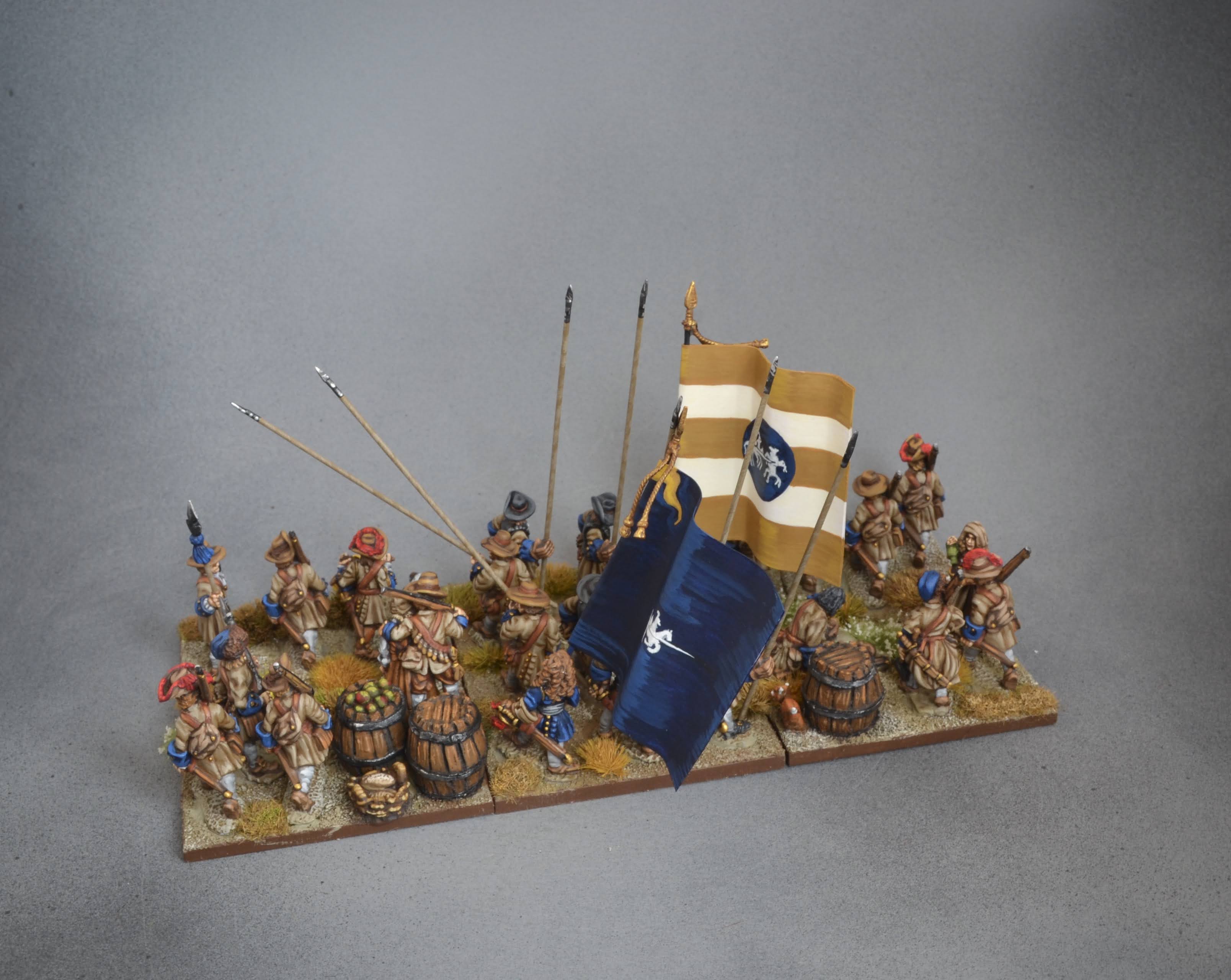
Among the various Analogue Hobbies Painting Challenge entries I prepared earlier this year, I been painting a German mercenary regiment for my late seventeenth century project centred around the fictional Free-Flemish City of Laarden.  I wanted a unit of German mercenaries who could easily take to the field on either side - Flemish, or French - and who knows, perhaps be of dubious loyalty to both, or either.

Casting the net to find for mercenary formations in the seventeenth century is not hard. There's a good choice of formations from the Thirty Years War, the Fronde, the Northern Wars and further to the East. 

I came across the name of Count Wilhelm Kinski, a colleague of Albrecht Wallenstein, the great Imperial military enterpriser and general in the Thirty Years War. Kinski - also spelled as Vilém Kinský or Vchynský - was a Bohemian soldier of fortune whose landed property passed to more reliable Hapsburg supporters after Wallenstein's murder in 1634.

I've also come across a reference to a regiment of Kinský serving in France in the Fronde in the 1650s, perhaps some distant relation. So, following a theme, I thought it was not unreasonable to place a regiment of the same name in late seventeenth century Flanders, as Bohemian "children of fortune" following the drum.


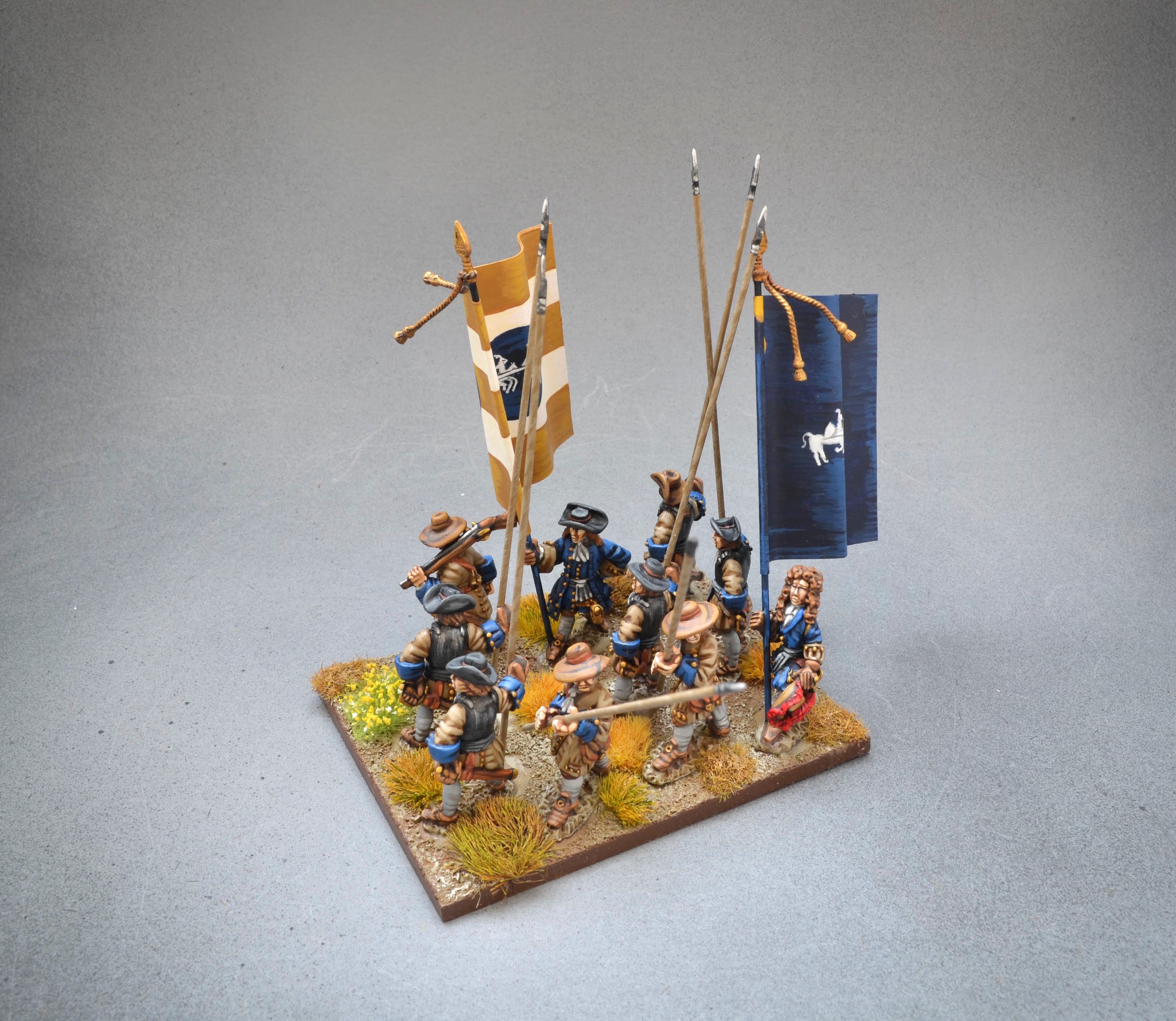
These 25mm figures are a real mix.  I used Dixon Miniatures and Wargames Foundry for the soldiers.  The camp followers are from Midlam Miniatures and Colonel Bill's.  The cat and the dog (also following the drum, or the food) are from Warbases, and the barrels of beer and apples are from Hovels.  The basket of bread is from Irregular Miniatures (and has finally found a base after about 30 years in the spares box).


I struggled with finding good standards for German regiments which did not feature an Imperial Hapsburg eagle.  Most of the German regiments in the Northern Wars between Denmark and Sweden seem to have adopted standards similar to one of the Northern belligerents, rather than something more personal to the colonel of the regiment.  

I did come across a couple of standards which featured a pair of duelling knights on horseback, and used that design for the centre-piece of the standards, which I painted myself.  

I tried to go for standards which looked sufficiently 'German', but which could also reasonably pass for use in either a French or Flemish or Imperial army in the period.  I wanted to get the most use on the wargames table for these "children of fortune" - from Laarden to Tuscany, and from the Palatinate to Muscovy, so to speak.


As befits professional soldiers of fortune, I didn't bother with lots of green-stuff lace, feathers and ribbons.  Such affectations are not for true masters of their craft - we can leave that to the French cavalry, or maybe faux-French-fashion-following Flemish cavaliers (#forthcoming, dear readers).  I thought that the beer barrels we possibly more in keeping with the mercenary lifestyle these 'gentlemen' would have enjoyed.


I fluffed up the bases a bit with tufts from WWS Scenics (which are very nice), and some static grass.  I tried to get the 3mm bases (from Warbases) to be as neutral as possible, so went for a burnt umber tone for the edging, instead of black.


And or all the collectors out there, here's the Collectible Character Card for the "Enemies and Allies of Laarden, 1688: The Challenge XI Collection", for Count Kinský and his "children of fortune'.

If you see them in the Grote Markt at Laarden, dear friends, just trust me. Walk the other way...


(*  I should mention that the chilling Bohemian song isn't mine.  The verses are from a Strasburg-published text from 1650, which I took from page 472 of Fritz Redlich's "The German Military Enterpriser and His Workforce" (1964).  Dr. Redlich's famous book has everything you'd ever want to know about sixteenth and seventeenth century mercenaries, and is very much recommended if you can find a copy.)

*******
Sunday, 11 October 2020

“… as meer Mercenaries, and Hirelings to serve any Arbitrary power whatsoever…”: German Foot, 1688

"And for this cause also was the Army at first raised, formed, and commissionated, namely, for the defence of the just, civil, and religious Rights, Liberties, and Safety of the good people of this Nation; and not as meer Mercenaries, and Hirelings to serve any Arbitrary power whatsoever"

*******

So wrote the author of a pamphlet from 1659, entitled "The Army's plea for their present practice: tendered to the consideration of all ingenuous and impartial men" about the New Model Army, in its final year of chaos before the Restoration brought everything crashing down. "... meer Mercenaries and Hirelings" - it's so gloriously dismissive, isn't it?


One of my favourite blog posts of the past few years, since I went back to the seventeenth century as a wargaming period, was something I wrote about hiring German mercenary foot, recruited by the civic elders and burghers of the (fictitious) Flemish city of Laarden to brace and supplement Laarden's otherwise creaking military capacity.  

As I wrote that post, I loved thinking through the various restrictions which might be applied to a contract for the supply of mercenary troops.   Since then, I've tried to read more concerning what the term "mercenary" soldiers meant in early modern Europe - whether they were "meer Mercenaries, and Hirelings", or whether this term was really just another name for veterans.  Men who knew which end of a matchlock musket the powder and ball got rammed into, maybe.  Over the years since that post, I've painted the figures I blogged about, and added some more - in the shape of a battalion of Southern German foot.  I thought it was about time I added them to the Blog from my photo-backlog.

First up is the North German foot battalion of Graf Joachim von Bek.  Rather than pick an Imperial battalion from the (very) long list of Imperial regiments from the 1680s, I wanted von Bek's foot to be taken from a painting of the period.  There was an Imperial regiment of Bek, but what I had in mind was more alt-historical - a battalion which, having served in the Dutch Wars could then have experienced warfare in the Baltic.  Pieter Wouvermans' painting of the December 1672 assault on Coevorden has an amazing variety of both foot and horse in the foreground.  I really liked the look of the foot on the right of Wouvermans' painting, with the yellow damask silken standard.


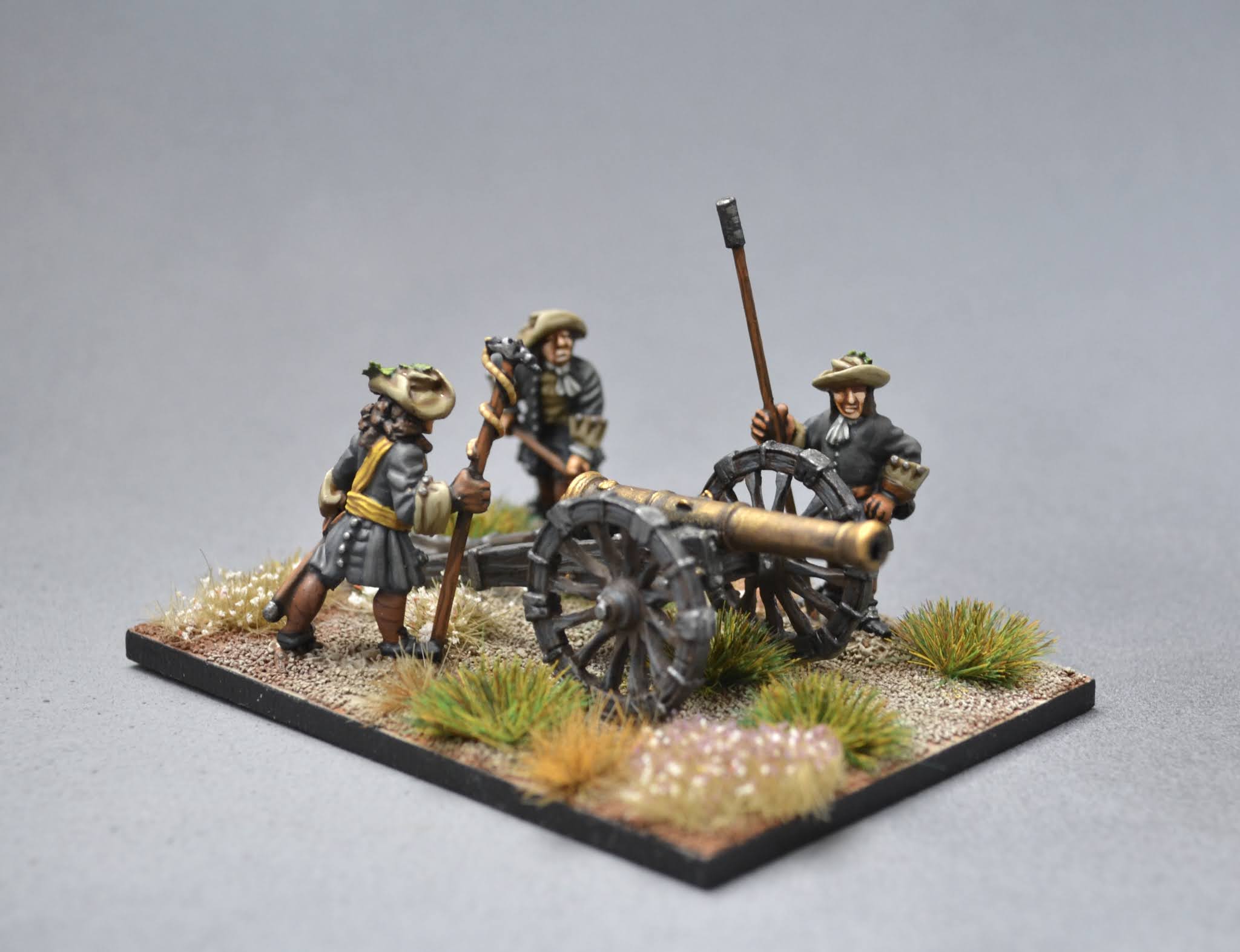
I tried to capture some of the grey, ochre, buff and brown figures in the painting in the uniforms for Graf von Bek's Foot.  Being mindful of just how many light grey uniforms I've had to paint with Louis XIV's French foot, I was keen to try and find (or justify) German foot with some more varied uniforms.  I thought dark grey uniforms would set off the ochre- and buff-coloured stockings and cuffs, while staying true to the soldiery in Wouvermans' fine painting.  Also, as I mentioned in the earlier Blog post, I added brass frets of oak-leaves to make the Imperial, or Imperial-subsidised, foot to make them more distinctive on the tabletop battlefield.


The brass fret, from Scale-link, is really nice to use.  Easy to cut, and easy to add to the hats of the soldiers with super-glue or expoy, the brass fret just allows an alternative to a hat full of (green-stuffed) ostrich or partridge feathers.  


I tried to replicate Wouvermans' standard in the painting on the paper flag.  I don't think its my best effort - maybe the yellow damask-silk looks too clean, or not shaded enough.  Maybe the shield on the quarter of the flag isn't really shaking enough in the breeze.  Anyway, it's done now.  Knowing when to stop painting is one of the hardest things to master, sometimes!

I finished the regiment off with some Bicorne finials, 3mm MDF bases from Warbases and some grass tufts from WSS Scenics.  I would recommend all of them, just for finishing things up on a wargames unit.  


Unlike the Flemish or French foot in my collection of units for Laarden 1688, I wanted to include a couple of battalion guns for the German foot.  Not too many, but just a couple - maybe to test out if they would make a difference on the table.  I added this one from Dixon Miniatures, complete with a suitably uniformed gun crew.


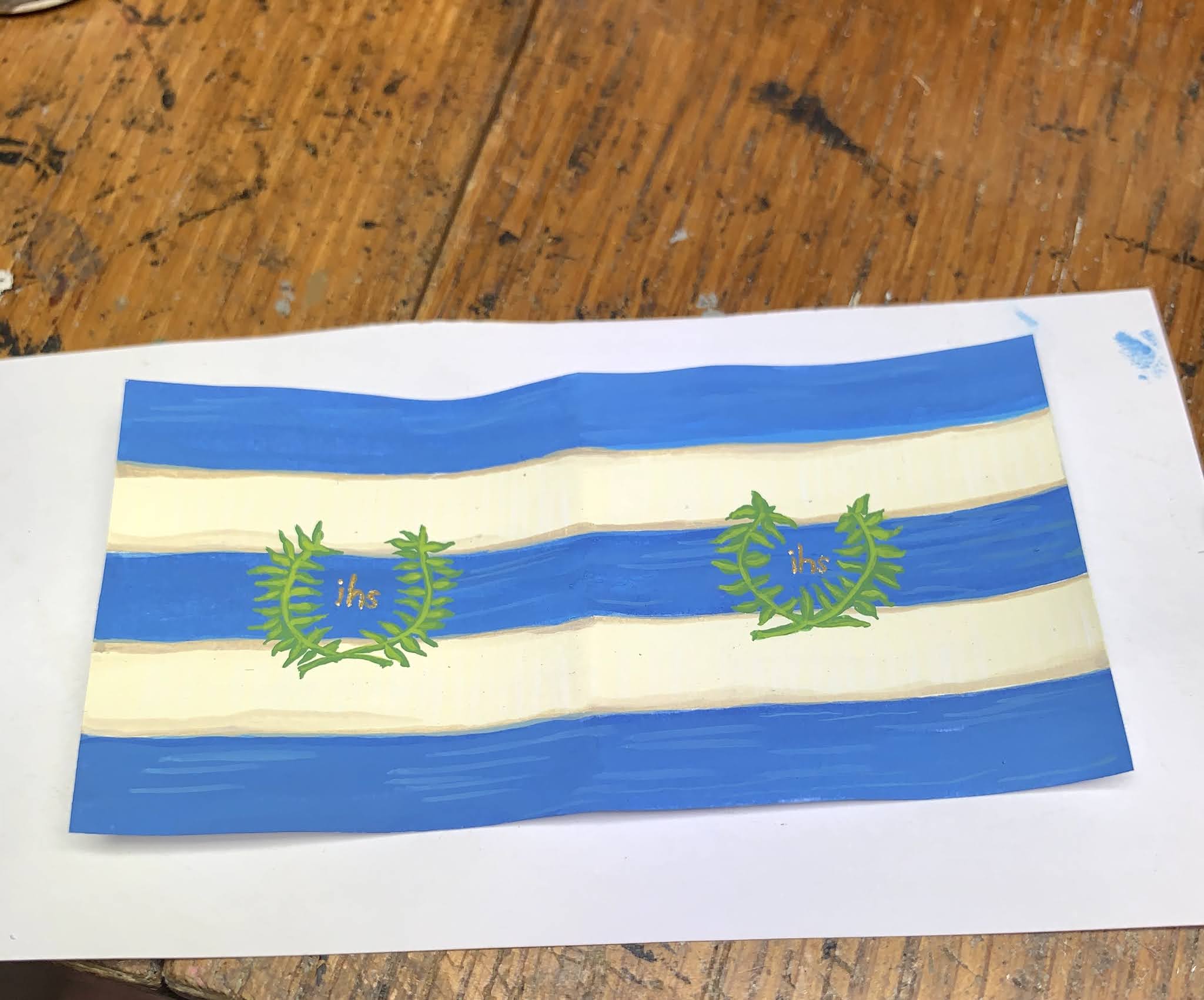
I also had a few Bavarian foot left over from an older project.  These came to me from a friend, a long while back.  He had kindly sold me the shot, but I needed to add some pikes, add the standards and the bases.  As this unit was a little of an after-thought, I'd not purchased any Bavarian chequered standards in advance.  Casting around for inspiration, I found the following image on the front of Helion's fine book on the Bavarian army of the Thirty Years War - it looked a lot more practicable than painting Bavarian chequers...


The Bavarian blue is a lovely colour, which should hopefully look distinctive on the tabletop.  Bavarian forces were heavily committed in the later Thirty Years War and in the Nine Years War, so adding the possibility of Bavarians to one of the sides on a later seventeenth century tabletop doesn't seem too outlandish.  The regiment I found in Bavarian light blue and yellow ochre was Lützenberg - so the uniform is accurate, even if the (alt-historical) standard is not!  Hopefully these are the first of several Bavarians over the next few years.


And finally, because I enjoy creating nonsense documents as a back-drop to future campaigns, here's a letter from one of my notebooks from an old friend of the Blog, Don Fernando de Torrescusa (Marquess de Girona, Envoy of His Most Catholic Majesty, Carlos the Second, King of Spain, to the Flemish Free City of Laarden in 1688, and so on...), commissioning more forces for the wars in Flanders.


 *******
Related Posts Plugin for WordPress, Blogger...