Wednesday, 8 November 2017

Crisis 2017 - Antwerp: Another Excellent Show


As mentioned in my last Blog post, I’ve added below some of the photos from our trip to “Crisis” 2017 in Antwerp last weekend. Readers of this Blog will know that, for quite a long time, this has been a highlight of my wargaming year.

Crisis is a wonderful wargames show, with a huge amount of that credit going to the tireless members of the Tin Soldiers of Antwerp wargaming club, who year after stage a terrific event. However, Crisis is more than just another wargaming convention. It’s a perfect venue for wargamers and hobbyists throughout Europe to meet up and share ideas, experiences, roll some dice, play some games and buy (yet more) figures, terrain, tools, books and stuff.


I'm guess if you’re a wargaming hobbyist in Central France, Denmark or Southern Germany, you might well have made the trip to Salute in London once or twice. But, as a general theory, I would expect that it might be just as easy, or even easier, to make the journey to Antwerp. I certainly was able to meet up with a lot of my European wargaming and hobbying friends this year at Crisis – which I think provides some evidence that my theory possibly works! 

So, before I forget – thank you very much to everyone who dropped by to say hello – including Sander (and especially Arthur), ChristopherS, Nick (Moiterei), Stefan (K), Jur, Michael (MiniMike), RobP, Jacco, DaveD, Stephen (A), Graham, Chris (G), Misha, Koen, Geoff and of course Curt (and Sarah) who I met with at the show and travelled back to London with on Eurostar. I am sure there are many people I’ve forgotten, but thanks for saying hello.

So how was the show itself? 

Rich, Nick, Biffo, Noddy and myself ran two games at the show. The first, a Chain of Command game set in late May, 1940 close to the Ypres-Commines Canal. This was a terrific game staged by Rich, featuring some great terrain making skills, including a very fine railway embankment (which you can read about on the Lard Island Blog HERE). 


What was particularly interesting was that the action in the game was staged around locations which we had visited on a battlefield walking tour the two days before the show (more about that in the next Blog post). Rich’s meticulous preparation of the battlefield tour meant that I had a good knowledge of the context of the battle (somewhat of a first for me in a Second World War game). 

Our second game was a Sharpe Practice game, staged in the fictitious Caribbean island of Musique. British marines and jolly jack tars from a Royal Navy frigate faced off against French colonial militias a local mob of extremely angry slaves, several of which came perilously close to chopping up the local British Governor (me!). 


 A really fun game, and one which was busy through the day with old and new friends dropping by to play.

Rich and Nick won a well-deserved Best participation Game award at the show, even despite me doing my usual best to hinder proceedings. Well done chaps!


Other games at the show were uniformly excellent. Here’s a few of the very best (although by no means all of them):

One of the tables near us featured this stunning game of 30 Corps’ advance into Gelderland at the start of Operation Market Garden in 1944. Fans of the film “A Bridge Too Far” will recognize the scene at once. “Get that wreck off the road!!”


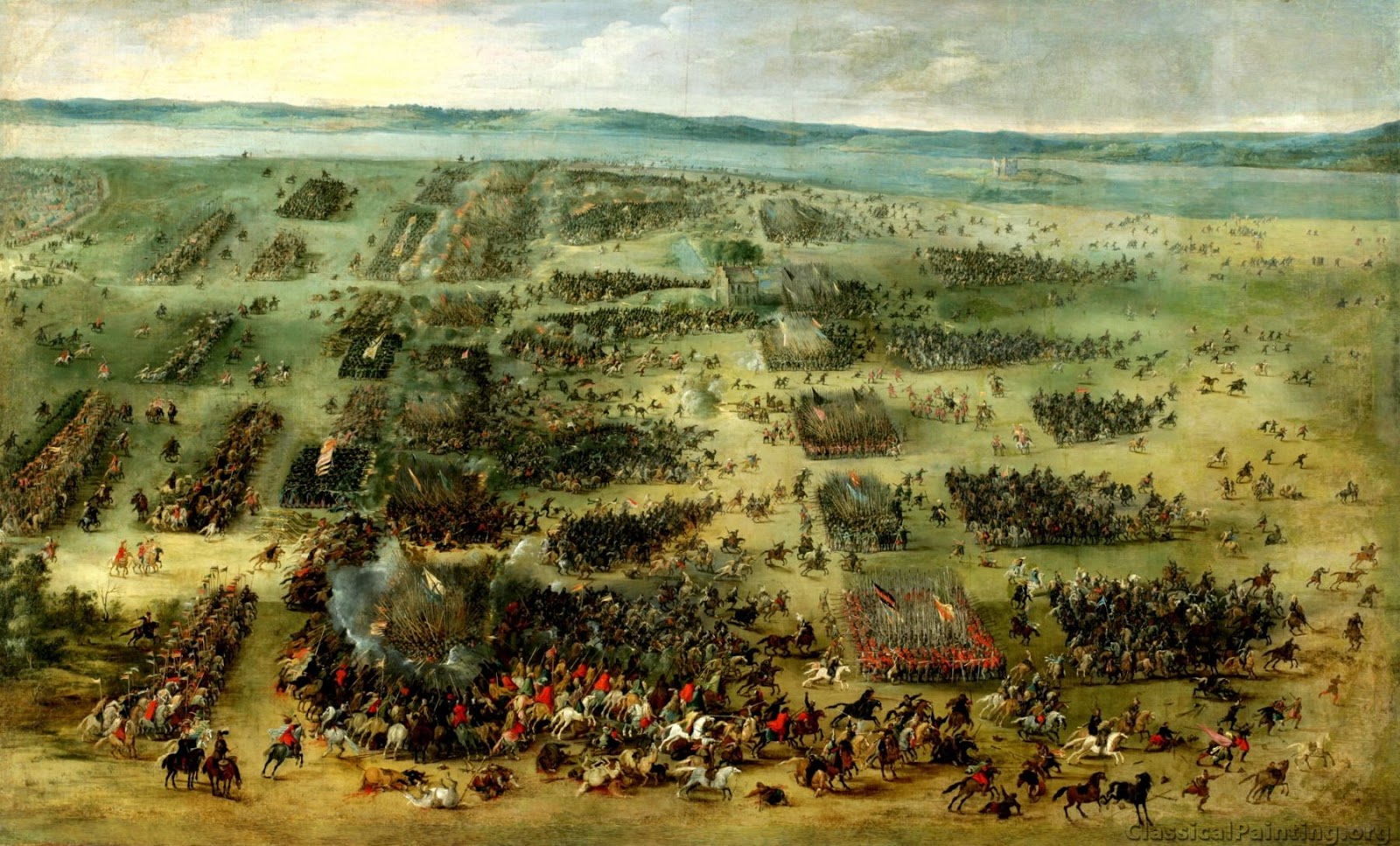
A wonderful game set in the Second Deluge of 1655-1661, in which Swedes and Poles were fighting it out before the gates of a small Polish town, caught my eye throughout the show. It was presented by the Kurpfalz Feldherren Wargames Club, and had some of the most lovingly painted figures imaginable. It was very good to see that the rules being used were the excellent “The Pikeman’s Lament” by fellow blogger, friend and all-round Gentleman, Michael Leck. It’s great to see that Michael’s rules are being used regularly and consistently – more of that in future Blog posts.


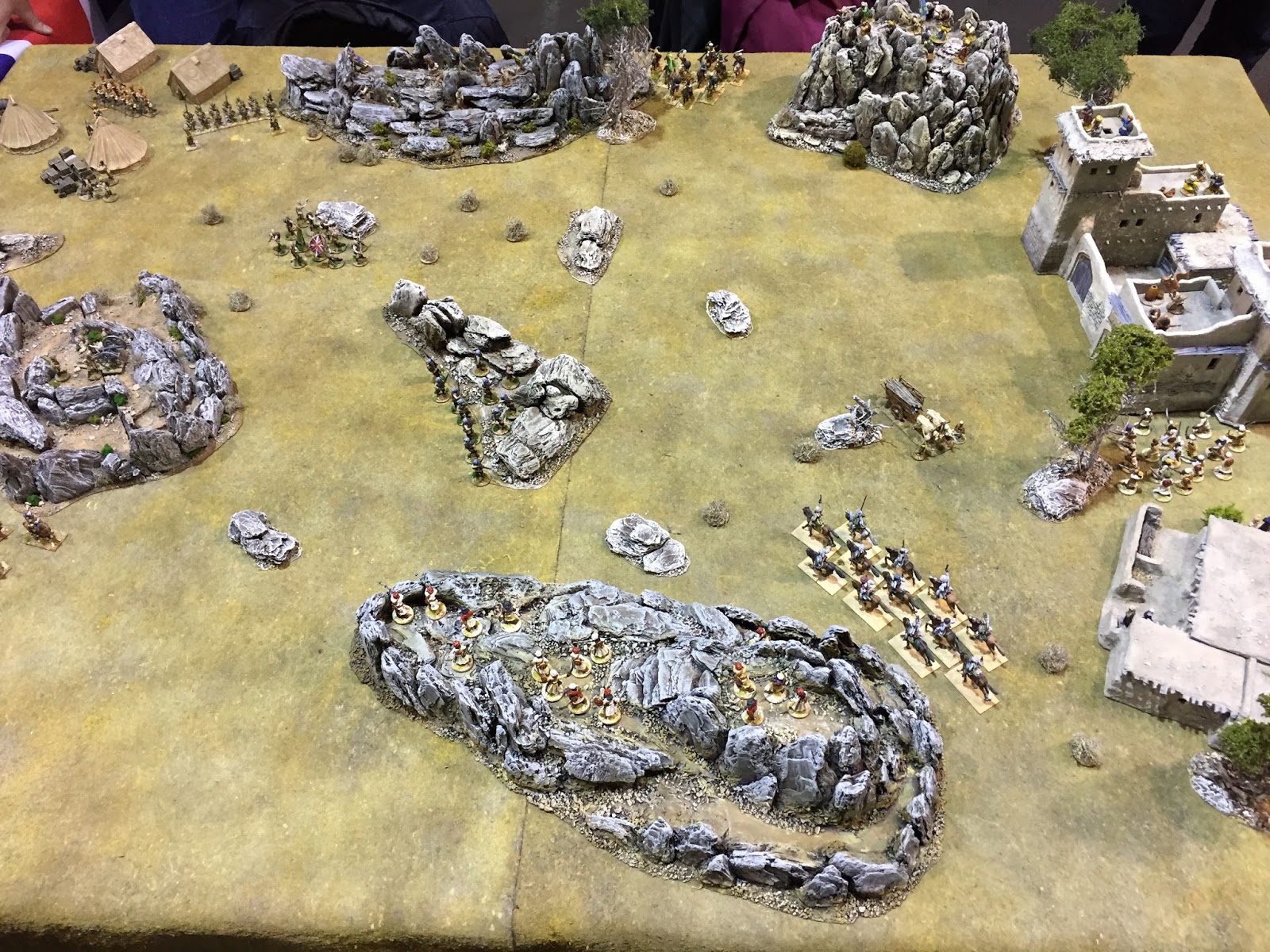
My good friend Stefan had, with his friends from his local club, been hard at work on this stunning North West Frontier game, featuring a great Pathan hill fort and some very creative rocky outcrops. Stefan mention this game is heading to Tactica in Hamburg in early 2018, so well worth looking out for.



There was also a game featuring a stunning, and huge, model of Breda castle from the 1580s. There’s a very fine article on this incident from the Eighty Years War in this month’s “Wargames Soldiers and Strategy” about the history behind the game, and the wargame itself. 


I really liked this game of Trenton 1776, which wonderfully captured a frosty engagement in the War of Independence.


I'd really like to know more about the battle of Kortrijk in 1302, or – to give it the accurate Flemish name – Guldensporenslag, the battle of the Golden Spurs. This game, staged by the Stipsiz Hussars certainly looked great. There were multiple copies of a book for sale on the battle by the table, but sadly they were in Flemish. Clearly, it’s another language I need to learn!

And, finally, there was a brilliant samurai skirmish game by Blitz 57 using the “Test of Honour” rules and featuring Dixon Samurai figures.


I’ve quite a few of these figures painted from the 1980s and 1990s. Seeing them on this table made me keen to bring them out again. I particularly loved the imaginative basing, which worked really well for the period and skirmish theme.

And no trip to Antwerp would be complete without visits to some excellent restaurants, bars and the usual tomfoolery which accompanies our road trips. 


So, many thanks again to the Tin Soldiers of Antwerp for hosting us, and to the people and City of Antwerpen which put up with us for another year. Looking forward to Crisis 2018!

Sunday, 5 November 2017

Wargames, Soldiers and Strategy #93: The Eighty Years War


Just a quick post to mention that this month's edition of 'Wargames, Soldiers and Strategy' features an introductory article on wargaming the eighty years war, written by me.  It's the first article I've written for a wargaming magazine.  I've read and collected wargaming magazines since the 1980s, so it feels slightly odd to now be holding a magazine which includes something I've written.

If you get the chance to read the article, I hope you enjoy it.  The Eighty Years War is a fascinating conflict, which I hope to be returning to on this Blog in the not-too-distant future


And, I'd be very remiss if I didn't thank Guy, Jasper and Mark for all the help, hints, tips and encouragement in the writing process.  Thanks so much, Gentlemen!

Next up, over the first couple of days, I'll be posting some of the photos from my trip to Crisis 2017 in Antwerp.  Hope you can join me for that.

Monday, 23 October 2017

Thirty Years War - 2mm "Shattered" Bases


"When an entire Victory is obtain’d, he who hath lost the day should not lose his Courage too, 
but ought to gather up his Shipwreck, rally his dispers’d and broken troops, get new recruits, dissemble his losses, encourage his party and draw to a head again; these are things 
practis’d by all intelligent Generals." 

Pallas Armata, Chapter XXII

One of the things I enjoy seeing on a wargames table are visual indicators of how well, or how badly, a battle is progressing for each side. I like to see formations fragmenting under pressure, and routing troops being pursued from the field. 

As it has taken a long time to prepare just a dozen or so battalions in 28mm for our games to be set in late seventeenth century Flanders, I’m not rushing to complete additional “shattered” formations for the wargames table in 28mm.

However, I like the idea of players being able to look over the table and, at a glance, see how their forces are performing. For our 2mm Thirty Years War set-up, I’m using coloured markers which can be placed on each of the brigade, Tercio, squadron and battalion bases to display the fighting condition of formations in the field. These range from no marker at all (Ordered), yellow (Shaken), orange (Disordered) and red (Shattered). 


But I wanted to go further, and make a small number of bases to specifically depict the formations with a "Shattered" status in the battle, allowing me to swap out the pristine based formations in a battle line with something more, well, shattered. There is some logic to this move, as well. In the rules we’ve been play-testing, units which are contacted by the enemy in a Shattered state are “Lost” – resulting in victory points for your opponent (abstracting the morale effect of losing standards, guidons, kettledrums, as well as the dismal sight of the “Shipwreck” of your cause as your troops flee the field). 

Having Shattered formations in your battle line therefore demands timely attention from any General, lest they be contacted by a variety of enemies including (variously) Croats, Finns or Tartars.


No manufacturer makes routing troops in 2mm, probably a fact which will come as no surprise to anyone. And there’s no ‘clumps’ of disordered troops which could fill the vacancy, either – although Irregular Miniatures does a very nice casting of a defensive pike hedgehog. So, inspired by a long-time distant article from Barry Hilton in Wargames Illustrated in the early 1990s (“Running Away Bases” – thank you Barry!), and encouraged by some conversations with my wargames chum Mark Backhouse about sculpting 2mm figure blocks, I tried my hand at making some “Shattered” bases.


Here’s the result. Each of the “Shattered” bases started life as a 1mm slab of plasticard, covered with green-stuff putty. Sculpting the figure blocks seems tricky at first, but you soon get the hang of it. I applied the green-stuff to the edges of the plasticard, and the top of the card, making a lattice grid to reflect the individual soldiers, and then fiddling with a sculpting tool to make the whole less regular. I added a few tiny wire pikes (at random chaotic angles), and some flags from the foil from a wine bottle (the wine having been enjoyed first, of course).


I undercoated the formations, and painted them all in fairly neutral browns, buffs, and greys so they could fit with either the Swedish/ Weimarian or Imperial sides. They look a little impressionistic in close-up, but from 3 or 4 feet away, on the table, they look distinctive enough to remember that they're not standard formations in the battle line.


The flags are, of course, slightly out of scale, but I think that’s acceptable for a 2mm brigade or battalion. You really want the flags to catch the eye of the troops in formation, and a making the flags a little over-scale therefore works well. A couple of the flags I draped on the ground – which I think catches the eye and perhaps suggests precious standards being abandoned in the field.

I should probably have ensured that the bases are not as regular. Almost certainly something to change next time.

I added some 1mm snow effect “flock” to the bases. The “flock” is almost dust like in consistency, but glued down on some PVA I think it adds something to the winter appearance of the bases and is in keeping with the rest of the winter terrain for the Lutzen game. 


You can probably see in the photos above that I’ve also done a few “Shattered” cavalry squadrons, although I’m less convinced they work as well, perhaps because of a lack of lame, wounded or fallen horses. Something for a future project, perhaps.


You can also see that the greenstuff sculpting can be used for filling out existing units. I tried bulking out some Eighty Years War Dutch militia battalions with the same approach of adding greenstuff figure ranks, for the Amsterdam and Utrecht militia for the 1620s and 1630s.


I also used some of the modelling putty to scratch build a coach for the Imperial Chancellery, which 
Gustavus' Swedes came close to capturing at one point in the campaign.  


I hope that’s of use to someone!  And, for those of you with fading eyesight (including me), there's something 28mm scale for next time.  Hope you can join me for that!


Saturday, 14 October 2017

The TooFatLardies Oddcast: number one


It seems strange to say that I've taken part in a podcast after I've made such a poor effort of keeping this Blog going during the year - but I have.

With Richard Clarke and Nick Skinner, I had fun in recording the first TooFatLardies Oddcast, an irregularly appearing podcast about wargaming. You can find the link to the first show here: Lard Oddcast One

During the course of the show, we each chose a book to talk about briefly: Rich went with Sir John Keegan's "The Face of Battle", Nick chose Dr Paddy Griffith's "Forward into Battle", and yours truly went with "The Commentaries of War" by Blaise de Monluc.

Books and wargaming go together perfectly, so I'm hoping listeners will enjoy this part of the podcast.


I've again picked some slightly less well known books going forward for future podcasts, mainly so we make sure we have a lot of variety.

I hope you enjoy the first podcast. We've a series of six planned, after which I guess we'll see if anyone wants more!

Happy listening!

Wednesday, 30 August 2017

Lard on the Volga - Birthday Bash 2017


It seems strange how something always seems to crop up on the evening my local wargames club meets. School plays, my daughter’s swimming training, my son's football games, a phone call with work – whatever the excuse, it’s going happen on a Tuesday evening when my local club meets.

For a long time we’ve talked about meeting on a weekend, and putting on a club game. 

I turned 50 a little earlier this summer, and this seemed like a good excuse to hire the club venue and stage a large game of “Chain of Command” last Saturday. My chums Richard Clarke and Nick Skinner have already posted a ton of photos from the game on their fine Lard Island News blog. So what follows is my recollection of our visit to Korbinskaya on the Don River.

For anyone thinking about staging a “birthday game”, I can honestly simply say – do it! It’s a great way to arrive at “that” milestone, as well as spending the time with a great selection of friends who just also happen to be wargamers.

Setting the Scene


One of the fun things about any wargame is setting the scene. Rich sent a few emails to me in the week before the game, detailing the setting on the river Don at the small town of Korbinskaya and it’s nearby Collective Pig Farm No. 452. A force organisation table later and I was in business, sewing minefields, working out defensive positions and finding old photos on the internet of what a collective farm would look like. A little goes a very long way when it comes to inspiration!

The table

We ended up with a large wargame. Indeed, 22 feet of wargame, from the Don to Collective Pig Farm No. 452. As you’ll see from the photographs, Rich and Al’s terrain was a joy to behold.


The fine Russian buildings from Warbases, Sarissa and Charlie Foxtrot looked splendid. My favourite was a wonderful Russian Church, complete with boarded up windows and Bolshevik and Soviet posters demonizing the Russian Orthodox Church.


Logistics

Never let a wargamer go hungry or thirsty. It’s an old saying (I’m sure), but nevertheless it’s an accurate one. I had arranged for lunch to be shipped in from our local bakery including a selection of decadent, bourgeoisie confectionary. Inevitably this was enjoyed by the Soviet players just as much as by the evil Nazi players.


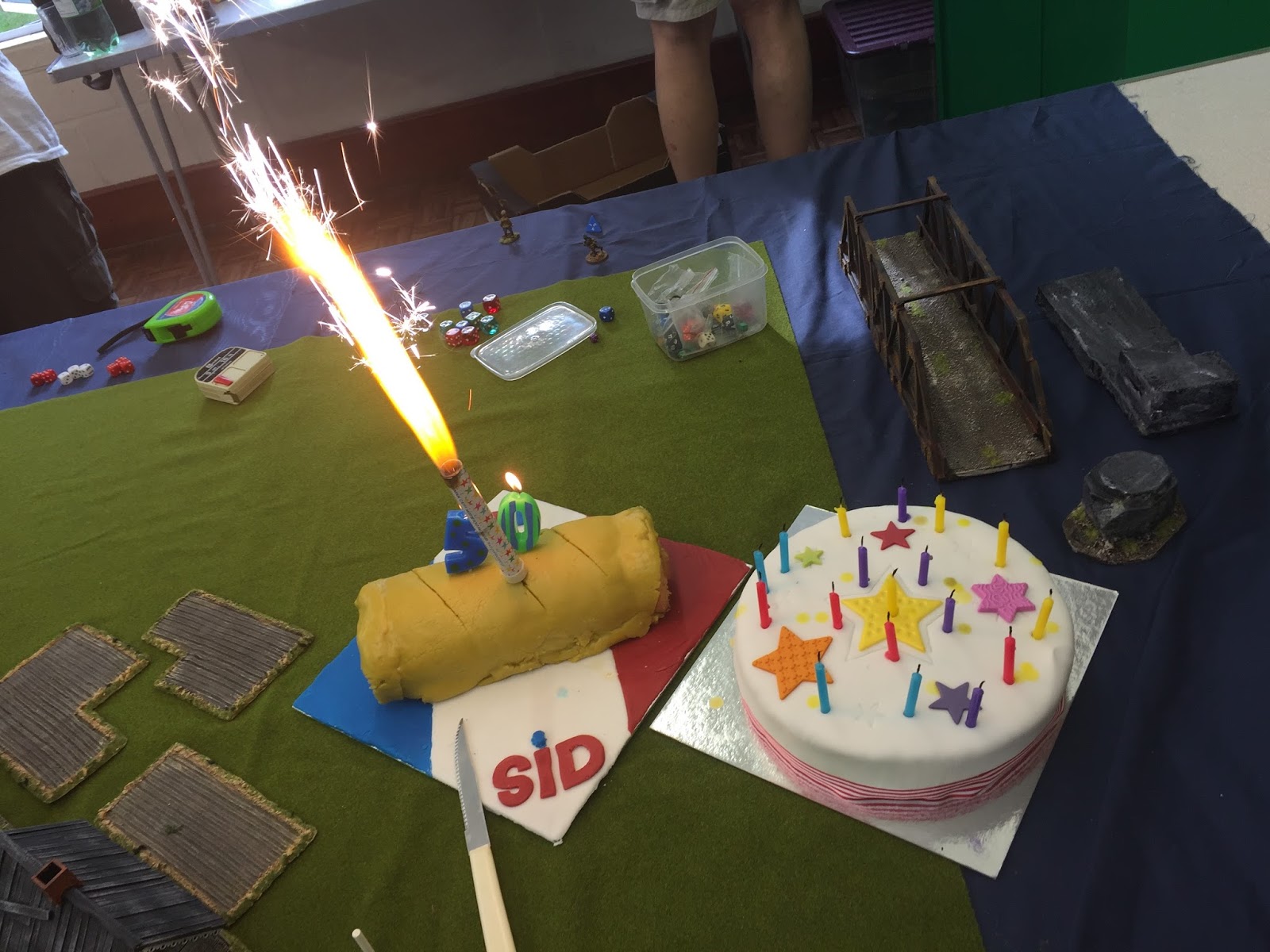
I was honoured by my Lard chums increasing our collective daily sugar intake by creating two cakes, which were unveiled at the end of the day’s gaming. Despite initial misgivings, the indoor (Health and Safety Approved) sparkler worked far better than the Soviet pioneers’ satchel charges on the tabletop.

The game

As all games seem to do, it raced by. The Germans thrashed forward to the small, Tasrist-era bridge over the Lenmakluski stream, while I attempted to corral a slightly-recalcitrant defence using fiendish Commissar methods. The Soviet sailors from the Black Sea fleet arrived in the nick of time, just as most of the crews from the T-34s were bailing out under steady German fire.


As you can see from the photos, the troops provided by Rich, Al and Ade were of a wonderful standard. Thanks chaps!

The After-game entertainment


The best part of wargaming is the friends you share the hobby with. As might have already been mentioned by Rich, one can only hope that the band enjoyed themselves as much as we did.
Related Posts Plugin for WordPress, Blogger...